
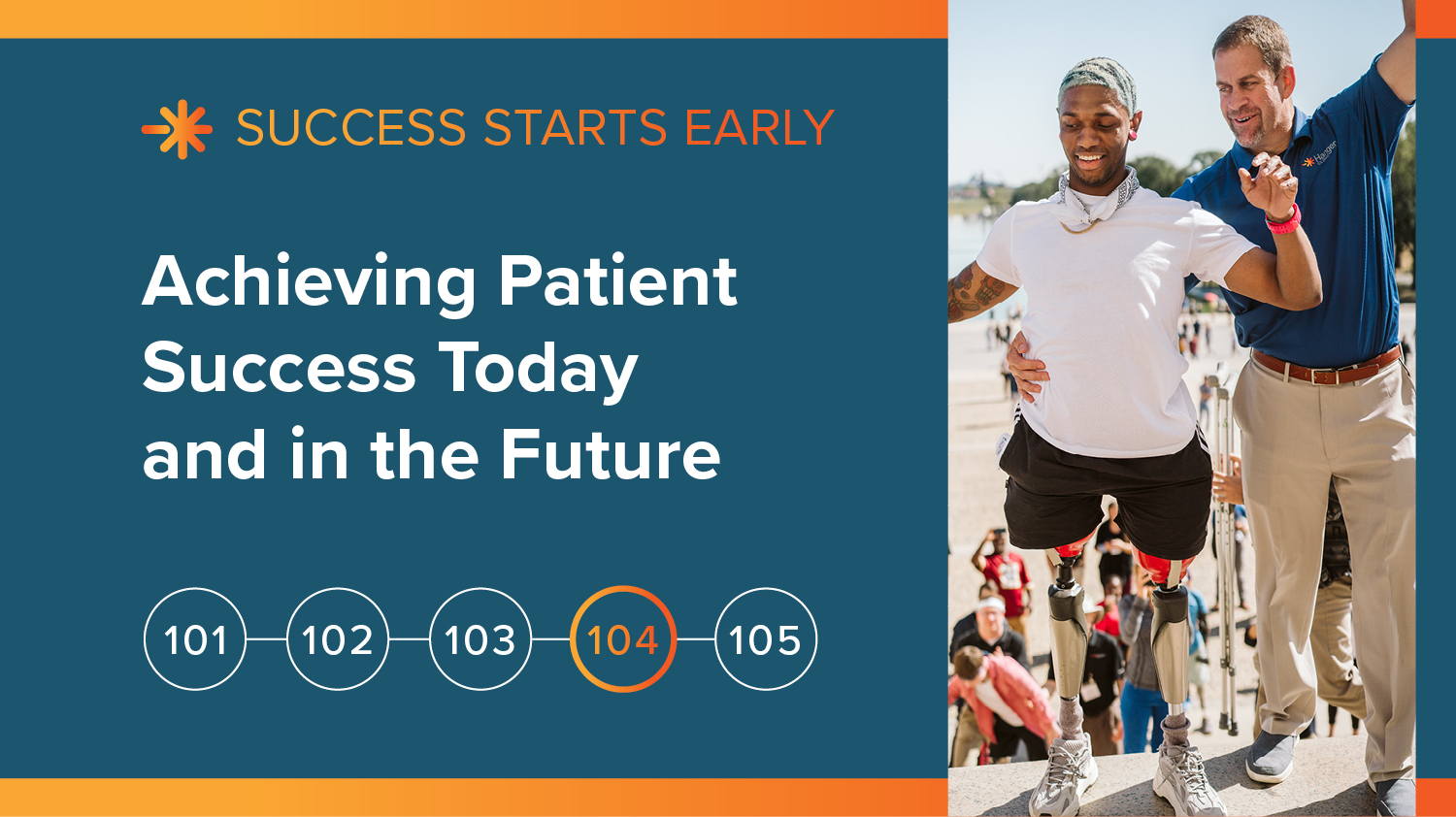
[Success Starts Early 104] Achieving Patient Success Today and in the Future
Date and Time
Location
Virtual Event
This course is a part of the Success Starts Early mini-series developed by physical therapists for allied health care professionals providing care for lower limb loss patients around the country.
This session will open with quick tips for ensuring the best fit of a prosthesis to help maximize mobility, including when and how to partner with your patients’ prosthetist.
Various outcomes measures for the amputee population will also be discussed, while emphasizing the importance of tracking patient progress throughout the care pathway and introducing common terminology used to communicate outcomes data between healthcare disciplines.
The session will close with a discussion around discharge planning. Discharge planning is about how we, as providers, can help guide patients through the healthcare system so they don’t fall through the cracks when they leave our care. For example, when someone gets discharged from a skilled nursing facility, are they being set up or directed to the next phase of their rehab or just sent home to figure it out on their own?
Upon completion of this program, participants will be able to:
- List techniques to ensure the best fit of a prosthesis that will help maximize mobility, including when and how to partner with your patients’ prosthetist
- Describe relevant objective measures and explain how objective measures relate to clinical practice, patient performance, and ongoing prosthetic mobility
- Summarize an effective plan for discharge that is specific to your patient needs