Ask the Expert: Living with Diabetes-Related Foot Conditions and Limb Loss
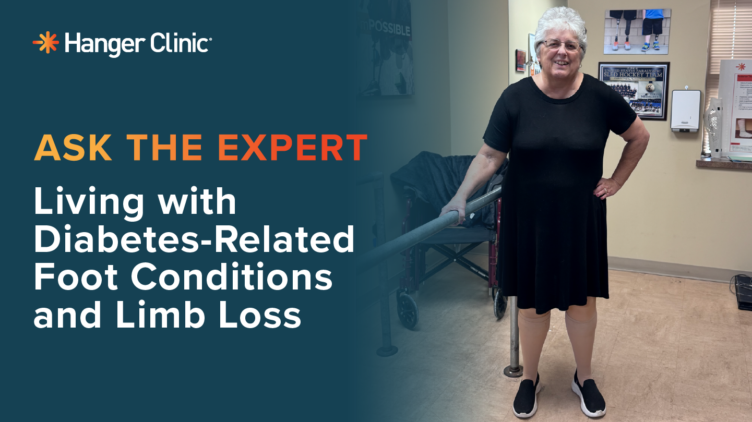
Diabetes and peripheral vascular disease (PVD) can lead to serious complications, including limb loss. At Hanger Clinic, patients like Linda Moyer find strength and renewed independence through prosthetic care. After experiencing bilateral transtibial (below-knee) limb loss due to diabetes-related foot conditions, Linda is rebuilding her balance and hopes to dance again. We sat down with Linda and her prosthetist, Ken Doe, CPO, about living with diabetes-related foot conditions and the path to recovery.
Linda’s Diabetes Diagnosis and Beyond
Linda’s diabetes journey began decades ago, first discovered as gestational diabetes during her pregnancy with her youngest son. Over time, vascular complications in her calves restricted blood flow to her feet. “That’s what really started everything,” said Linda.
From medication to insulin pens, Linda tried various measures to regulate her blood sugar, as well as circulation sleeves and compression socks to help with blood flow. Despite her best efforts, she eventually developed gangrene in her left big toe. That led to the amputation of her left leg, and just four months later, her right leg, too.
“At first, I thought, ‘Oh no, not both of them!’ Then, I began accepting it. I reminded myself of my strong faith and became determined to get through this,” Linda recalls.
Now, nearly four years later, Linda is walking and working to regain her balance with help from Ken and her bilateral prostheses. She continues to care for her husband, Lloyd, and has hopes of twirling around the dance floor again.
Clinical Insights with Ken Doe
Ken Doe, CPO
Certified Prosthetist/Orthotist, Hanger Clinic
Ken began working in the orthotic and prosthetic (O&P) field as a technician in college, following in his uncle’s footsteps. He specializes in lower extremity prosthetics and describes the immense joy he feels helping people get back to doing the things they love most.

What experience does Hanger Clinic have with diabetes-related foot conditions?
Hanger Clinic has extensive experience supporting patients with diabetes-related foot conditions, offering specialized care including protective inserts, custom footwear, ankle-foot orthoses, prostheses, and education to help prevent complications and improve mobility. Patients are often referred to Hanger Clinic by podiatrists and other physicians who notice abnormalities when performing health assessments and checking for sensation in a patient’s lower extremities (legs and feet). In addition to certified orthotists and prosthetists, select Hanger Clinic locations also have certified pedorthists (C.Ped.) on staff to help provide patients with foot orthoses, including protective insoles and appropriate fitting shoes.
Ken shared, “As a Hanger Clinic certified prosthetist/orthotist, I meet with patients and work on the design, fabrication, fitting, modification, maintenance, and ongoing care for prosthetic and orthotic devices. Additionally, Hanger Clinic offers education and resources to support patients throughout their journey.
Regardless of a patient’s condition, restoring mobility and preventing further complications related to the disease is the primary goal of treatment.”
What leads to amputations in people living with diabetes?
Amputation in people living with diabetes is most often caused by a combination of nerve damage (neuropathy) and poor circulation (peripheral artery disease), which makes wounds harder to detect and slower to heal. When infections develop and don’t respond to treatment, amputation may be necessary to prevent further complications.
Neuropathy
- Long-term high blood sugar damages nerves in the feet and legs.
- People may lose sensation; meaning cuts, blisters, or ulcers can go unnoticed.
- Continued pressure on these wounds can worsen them and lead to infection.
Peripheral Artery Disease (PAD)
- Diabetes can cause fatty deposits to build up in blood vessels, narrowing them.
- Reduced blood flow slows healing and makes infections harder to fight.
- Severe tissue damage or gangrene may result, requiring amputation.
Why are leg amputations more common than arm or hand amputations?
Lower extremities (legs and feet) are more vulnerable because sedentary lifestyles reduce blood flow to the legs. Neuropathy will then often begin in the feet and progress upward. Upper extremities (arms and hands) are closer to the heart and often remain more active, helping to improve circulation and blood flow to these areas.
How can you reduce the risk of amputation due to diabetes?
Most importantly, individuals should monitor blood sugar levels regularly and maintain a healthy, balanced diet.
Ken recommends his patients listen to their body and thoroughly inspect their feet daily since they may not always be able to feel when something is off due to limited sensation. If vision is an issue or assistance is needed, it’s important to have family members or caretakers check for calluses, wounds, and areas of redness.
Compliance is also a factor. If patients do not follow treatment protocols, there may be lasting implications.
“I can’t stress enough how important it is to listen to your body and inspect your limbs often,” said Ken. “Patients with PVD and/or neuropathy may not always feel things which can result in pain and challenges. If you notice something is off, be sure to address it with your care team and seek treatment quickly to prevent further progression of the disease. Don’t wait because the wound won’t.”
Exploring Diabetes Further
Discover additional insights on diabetes and managing diabetic foot complications.
Linda’s Next Chapter
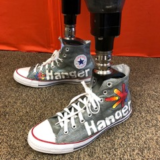
Ken praised Linda’s spirit from the start, recognizing her positivity and unwavering determination to keep going. He recently fit her for new prostheses, complete with custom covers that have given her an entirely new outlook.
“From the beginning of this journey, I told myself I’m going to do what I can and going to try to accomplish everything they teach me,” said Linda. “Today, a lot of people are surprised by all that I’m able to do. I never say I can’t do something without trying first and knowing with certainty that I can’t. I am very positive and do what I can every day.”
She and Lloyd love music and dancing, and dancing is something that has been a constant motivator. Linda said, “One day, I’m going to dance just like they do on Dancing with the Stars!”
Request a Free Evaluation
If you or someone you love is looking for personalized prosthetic care, get in touch with a board-certified prosthetist at a Hanger Clinic near you.
Latest Updates
Subscribe to stay up-to-date on our latest posts.