One Challenge at a Time: How Mohamed Conquered the 250 Triathlon Across America
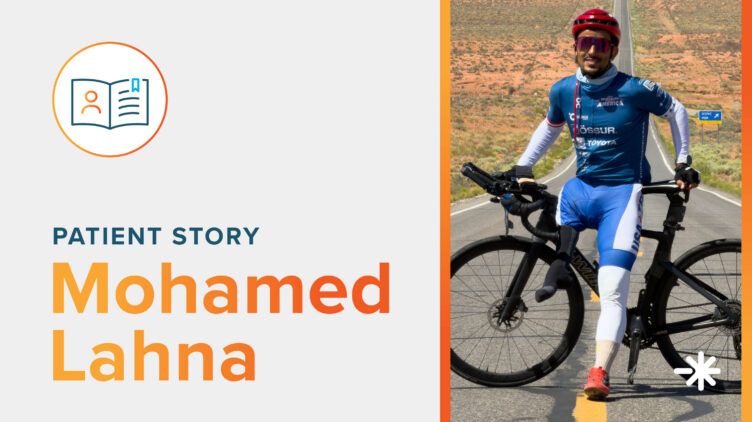
Born with proximal femoral focal deficiency (PFFD) and receiving his first functional prosthesis at age 20, Mohamed has spent a lifetime overcoming barriers. With support from his family, care team, and Hanger Clinic prosthetists, he completed one of the most demanding endurance challenges imaginable while inspiring others with limb difference to pursue their own goals.
A Challenge Bigger Than the Miles
On June 13, Mohamed embarked on the 250 Triathlon Across America, an extraordinary coast-to-coast endurance challenge that tested every aspect of his physical and mental strength.
Unlike a typical training session, there was no second chance. The swim required precise planning, support crews, nutritional checkpoints, and strict safety measures.
Every 30 minutes, Mohamed received hydration and nutrition from a support kayak while navigating boat traffic and changing conditions. However, finishing the swim was only the beginning.
The bike portion stretched across 29 days, averaging more than 120 miles per day. Early in the ride, Mohamed realized the enormity of what lay ahead.
Instead of focusing on the remaining distance, he concentrated on the next hour, the next mile, and the next challenge. Along the way, friendships, conversations, and overwhelming support from strangers kept him moving forward.
“The hospitality of the people I met on the road was incredible,” Mohamed said. “People invited me to meals. My friends rode beside me. The online support was amazing. Those conversations helped keep me going.”
Growing Up Without Resources, But Never Without Possibility
Mohamed’s perseverance was forged long before he became a Paralympic medalist or endurance athlete.
Born in Morocco with proximal femoral focal deficiency (PFFD), he grew up in a world where opportunities for children with disabilities were limited.
Determined to create opportunities for their son, his parents were relentless in their search for the right support for Mohamed. They fought for his education and found a school supported by Save the Children that served children with disabilities. The experience opened doors that would shape the rest of his life and inspire his mission to give back.
The 250 Triathlon Across America became more than a personal challenge. It became a platform to raise awareness for the communities and organizations, including the Challenged Athletes Foundation, that empower children and adaptive athletes around the world and made a lasting impact on Mohamed’s life.
The Freedom a Prosthesis Made Possible
Before receiving his first functional prosthesis at age 20, Mohamed relied primarily on crutches.
Early on, his school built him a simple brace consisting of a wooden foot and an aluminum bar.
“It was very basic, but it was the first time I had my hands free,” he said.
The device frequently broke, forcing him back onto crutches. Yet even that small glimpse of independence changed his perspective.
Then everything changed when he received his first prosthesis, complete with a knee joint.
“It was a game changer,” Mohamed said. “For the first time, I got on a bike and felt the wind in my face. That sense of independence allowed me to explore parts of my country I’d never seen before, and I couldn’t get enough!”
That freedom eventually led him to cycling, running, and triathlon competitions. Today, he believes his success underscores the importance of finding a prosthetist who is willing to listen, solve problems, and pursue innovative solutions.
A Partnership Built on Trust
For athletes like Mohamed, prosthetic care is never one-size-fits-all.
His congenital condition presents unique challenges, requiring customized solutions and a collaborative approach. That is why his partnership with prosthetist Jeremy Bilow at the Portland, OR Hanger Clinic has been so important.
“He’s very open-minded and willing to experiment,” Mohamed said. “He listens and is willing to spend extra time with me to get things right.”
The relationship began through the adaptive sports community and eventually evolved into one-on-one fittings and evaluations. Mohamed would share videos and photos of his training, while Jeremy offered feedback and adjustments.
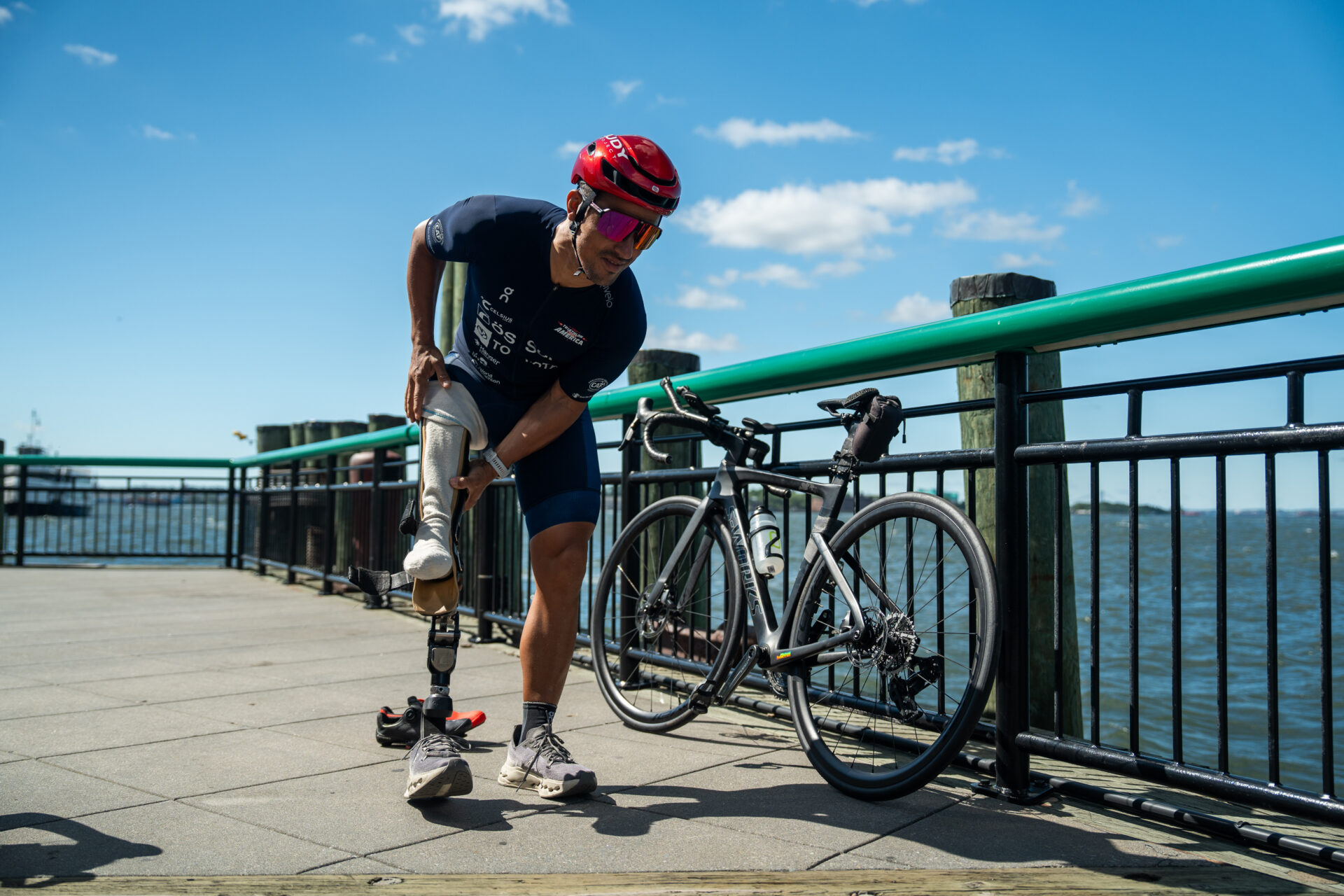
Together, they refined both his everyday prosthesis and athletic-specific devices, including modifications to support his cycling and running goals.
“It takes a lot of work and a lot of repetition,” Mohamed said. “Sometimes patients and prosthetists can get tired, but it’s important to stay patient.”
That patience paid off in unexpected ways. After wearing the same walking-leg socket for nearly 18 years, Mohamed finally transitioned to a new design with Jeremy’s help.
“When you get used to a socket, you don’t want to change it,” he laughed. “But he improved it enough that I finally made the switch.”
Support Across the Finish Line
The demands of the 250 Triathlon Across America pushed Mohamed’s equipment to its limits.
During the run segment, extreme heat and rugged off-road conditions caused multiple mechanical issues, including damage to an inner liner. As challenges arose, Hanger Clinic teams stepped in to help.
Jeremy even spent a day running alongside Mohamed during the event.
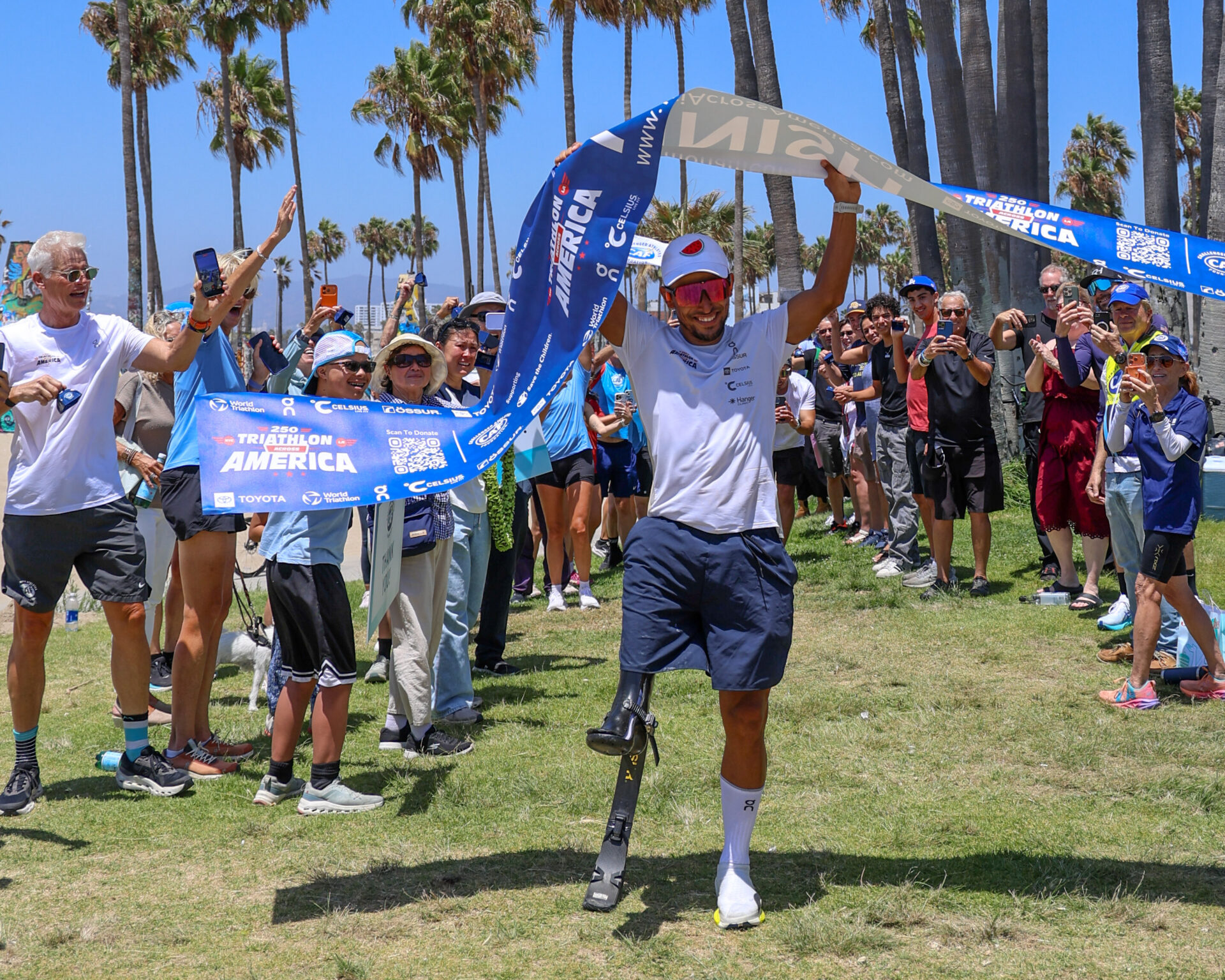
Later, when additional repairs became necessary, clinicians at Hanger Clinic locations along the route worked quickly to keep him moving forward.
“Everyone was just trying to help get me back on my feet,” Mohamed said.
Lessons for the Next Generation
As a father of three, Mohamed hopes his children learn more from his example than just athletic achievements.
They have watched him train, compete, struggle through setbacks, and persevere through pain. Most importantly, he hopes they learn not to fear failure.
“Don’t be afraid to fail,” Mohamed said. “Keep trying. Failure stops a lot of kids and teens. Don’t worry about what other people think. The people who care about you will rally around you.”
His advice extends to parents of children with disabilities as well.
“Treat your kids like kids,” Mohamed said. “Love them deeply, but don’t shield them from life’s lessons. Let them stumble, let them fail, and let them discover their own strength in getting back up. Be their biggest advocate, fighting for the resources and opportunities they deserve, but resist the urge to protect them from every hardship. Growth often comes from the challenges they learn to overcome themselves.”
Advice for New Prosthesis Users
For anyone beginning their prosthetic journey, Mohamed offers a simple message: Be patient.
“Just know that this isn’t like buying a pair of shoes,” he said.
Whether learning to walk, returning to activity, or pursuing athletic goals, progress takes time, communication, and teamwork.
“Be open and honest with your prosthetist,” Mohamed said. “There will be days when you get blisters, days when things don’t fit quite right, and days when progress feels slow. Give yourself grace through it all. Healing and adapting take time, and patience with yourself is just as important as patience with the process.”
Overcoming Fear
Today, Mohamed remains focused on new adventures. He hopes to compete at the LA28 Paralympic Games before potentially concluding his Paralympic career. Beyond that, he plans to continue exploring the world through even more endurance challenges, with destinations like Alaska, Patagonia, and Switzerland on his bucket list.
Still, the biggest lesson from his journey has little to do with sports.
“It all starts with an idea,” he said. “The hard part isn’t dreaming, it’s holding on to that dream when doubt creeps in. Too often, people let those moments pass and never discover what might have been.”
He encourages others to take the leap, even when success is uncertain. Whether pursuing a new sport, learning to walk with a prosthesis, or chasing a dream that feels out of reach, Mohamed believes growth begins the moment people move beyond fear and take the first step forward.
Request a Free Evaluation
If you or someone you love are looking for personalized prosthetic care, get in touch with a board-certified prosthetist at a Hanger Clinic near you.
From his first functional prosthesis at age 20 to completing the 250 Triathlon Across America, Mohamed has continually challenged what he thought was possible. His experiences with prosthetic care, adaptive sports, and endurance competition have shaped an outlook centered on patience and perseverancewhile inspiring others with limb difference to pursue their own goals.
Latest Updates
Subscribe to stay up-to-date on our latest posts.