Supporting Mobility and Independence for People with Spina Bifida
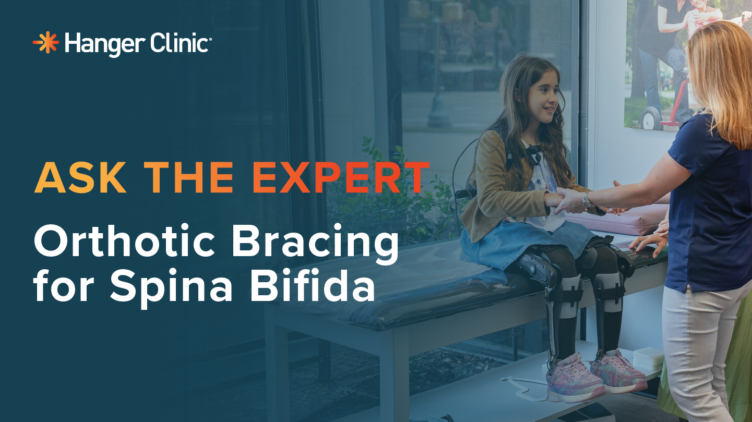
October is Spina Bifida Awareness Month, a time to increase understanding of spina bifida and recognize how orthotic bracing solutions and personalized care can help people reach their mobility goals.
To learn more about the role orthotic bracing plays in spina bifida care, we spoke with Hanger Clinic experts Eric Weber, L/CPO, FAAOP(D), Clinical Leader of Lower Limb Care Excellence, and Chris Toelle, L/CO, Director of Clinical and Scientific Affairs.
What is spina bifida, and how does it affect mobility?
Spina bifida occurs when the neural tube, the structure that becomes the spinal cord, does not fully close early in pregnancy. Because the condition affects the spinal cord and nerves, it can change muscle strength, sensation, balance, and movement.
Every person’s experience is different. Some people walk independently, while others use assistive devices or wheelchairs to get around. Changes in muscle function can also affect standing balance, walking efficiency, joint alignment, and skin health.
For many people, orthotic bracing plays an important role. It can support mobility, protect joints, and make everyday activities easier.
How can orthoses help?
Orthotic devices are designed to support weak areas, improve alignment, and help people move more efficiently. Bracing may help by:
- Improving stability while standing and walking
- Supporting proper alignment of the feet, ankles, knees, and hips
- Reducing the risk of contractures, which are tight muscles or joints that lose their range of motion
- Helping conserve energy during movement
- Supporting independence and participation in school, work, sports, and daily life
The right solution is highly individual. It depends on a person’s strength, mobility goals, and lifestyle.
What types of orthoses are commonly used?
Several types of orthotic devices may be used, depending on each person’s needs.
ANKLE-FOOT ORTHOSES: AFOs stabilize the foot and ankle when ankle control is limited. They can improve walking mechanics, reduce toe drag, and enhance overall stability.
KNEE-ANKLE-FOOT ORTHOSES (KAFOs): KAFOs support both the knee and ankle and may be recommended when knee muscle strength is reduced. Modern designs are lightweight and can include specialized knee joints that allow a more natural walking pattern.
HIP ORTHOSES: For people with higher-level involvement, hip orthoses provide support to the hips, knees, ankles, and trunk. They are often used with walkers or crutches to help with standing and walking.
MICROPROCESSOR KNEE-ANKLE-FOOT ORTHOSES (MPKAFOs): MPKAFOs are microprocessor-controlled leg orthoses that regulate stance and swing control with real-time responsiveness to everyday movements. This responsive control can help improve stability and support a more natural walking pattern.
SMART ORTHOTIC TECHNOLOGY: Smart orthotic technology, such as the Agilik™ by Bionic Power, are expanding what is possible for some people with neurological conditions. They provide dynamic knee assistance and resistance during the walking cycle and, for some people, make standing or walking possible in ways that were previously difficult to achieve.
How do clinicians choose the right orthosis?
There is no one-size-fits-all solution. When recommending a device, clinicians consider factors such as:
- Neurological level and muscle function
- Mobility goals and daily activities
- Skin health and sensation, since reduced, can make pressure problems harder to notice
- Age and growth
- Endurance and energy use
- Comfort and how likely the person is to wear the device consistently
Many people use more than one mobility solution, choosing a different device depending on the activity or setting.
Why is ongoing follow-up important?
As children grow, and as adults experience changes in weight, activity level, or physical condition, their orthoses may need adjustments to stay comfortable and functional.
Regular follow-up visits allow clinicians to:
- Check fit and alignment
- Look for skin concerns
- Make adjustments for growth or physical changes
- Confirm the device still supports the person’s goals
Proactive care helps prevent small issues from becoming larger problems.
How does Hanger Clinic approach care?
At Hanger Clinic, care is built around each person. Our clinicians work closely with patients, families, physicians, therapists, and other providers to create personalized treatment plans that support long-term success. Mobility goals change over time, and we partner with families at every stage of life to make sure orthotic solutions keep up with those changes.
Whether the goal is taking first steps, navigating school, playing sports, or staying independent as an adult, our team is committed to helping patients move with confidence.
What advice do you have for parents and caregivers?
Early evaluation can make a real difference. Even if bracing isn’t needed right away, working with an experienced orthotist lets you monitor development and plan for future mobility needs.
Pay close attention to skin health, check the skin daily, and speak up about any concerns with comfort, fit, or mobility as soon as they arise.
Most importantly, remember that mobility is not defined by a device. The best outcomes happen when orthotic care, therapy, family support, and personal goals all work together.
Why does Spina Bifida Awareness Month make a difference?
This month puts a spotlight on the experiences, achievements, and needs of people living with spina bifida. It’s an opportunity to raise awareness, improve access to care, and celebrate the many ways people with spina bifida take part in their schools, workplaces, families, and communities.
As orthotic technology continues to evolve, more people are reaching their goals and living active, independent lives. At Hanger Clinic, we’re honored to be part of that journey.
Request a Free Evaluation
If you or someone you love is looking for personalized orthotic care, get in touch with a board-certified orthotist at a Hanger Clinic near you.
October is Spina Bifida Awareness Month, an opportunity to increase understanding of spina bifida and the role orthotic care can play in supporting mobility. Hanger Clinic experts Eric Weber, LCPO, FAAOP(D), and Chris Toelle, LCO, share insights on personalized bracing solutions, ongoing care, and helping people work toward their individual mobility goals.
Latest Updates
Subscribe to stay up-to-date on our latest posts.